
Using AI as a Tool for Philosophical Inquiry
Philosophy has traditionally been a slow, contemplative art. It requires the digestion of centuries of text, the wrestling with abstract concepts, and the rigorous testing of logic. Today, Artificial Intelligence—specifically Large Language Models (LLMs)—has emerged not as a replacement for the philosopher, but as the ultimate interlocutor.
The Silicon Mirror
AI acts as a mirror for human thought. When you present an argument to an LLM and ask it to find logical fallacies, you aren't just getting an "automated critique." You are seeing your own blind spots reflected through the sum total of human linguistic history. The AI doesn't "know" the truth, but it knows the shape of thousands of truths previously argued by others.
The "Steel Man" Engine
One of the most powerful uses of AI in philosophy is the "Steel Man" technique. Ask the AI to take a viewpoint you fundamentally disagree with and construct the strongest possible version of that argument. This forces the human inquirer to move beyond straw-man fallacies and confront the core complexities of an opposing belief system.
Simulating Historical Dialogues
Imagine asking Marcus Aurelius to debate Albert Camus on the meaning of suffering. While an AI cannot literally summon their souls, it can simulate their prose, their logic, and their values with uncanny fidelity. This "Synthetic Dialectic" allows modern students to engage with the past as if it were a living, breathing conversation.
Ethical Stress-Testing
Philosophy is often stuck in thought experiments like "The Trolley Problem." AI allows us to scale these. We can ask AI to simulate the societal outcomes of different ethical frameworks—utilitarianism vs. deontology—across millions of simulated agents. It provides a "sandbox" where the consequences of our values can be projected into the future before we implement them.
How to use AI for Inquiry:
- Concept Clarification: Ask "What are the three most common misinterpretations of Nietzsche's Übermensch?"
- Synthesizing Disciplines: "Apply the laws of thermodynamics to the concept of psychological burnout."
- Socratic Dialogue: Prompt the AI to act as Socrates and question your assumptions about "justice" one by one.
In the age of AI, the value of a philosopher shifts from possessing answers to framing the right questions. The AI provides the data; the human provides the "Why." As we move forward, the most profound insights will likely come from those who can dance with the machine without losing their human soul.
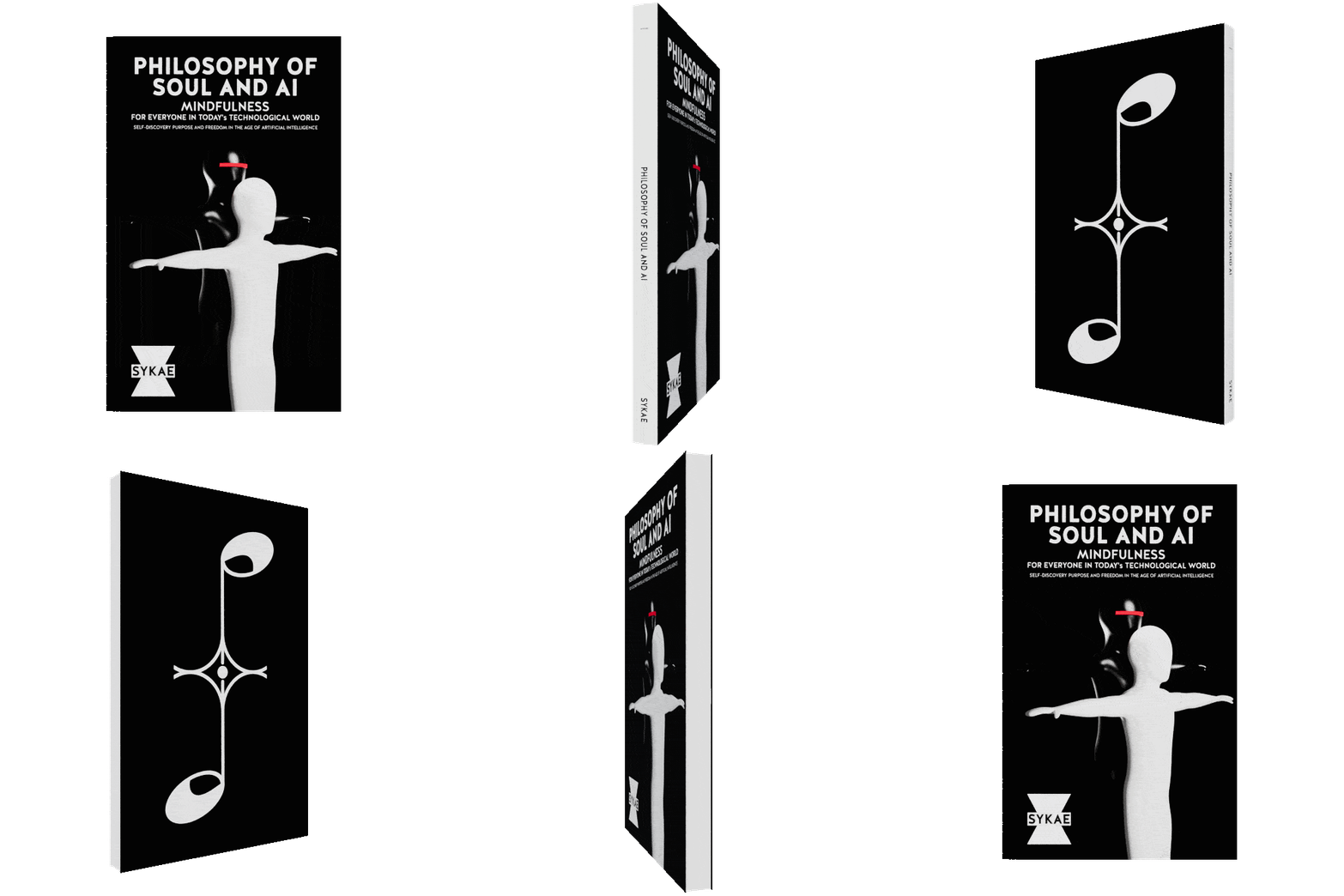
The Dialogue Continues.
Explore how technology and spirit converge in our latest investigative work.
Explore the Philosophy