
The Science of Digital Brain Rot: How Short-Form Content Changes Us
While the cultural conversation around "Brain Rot" often focuses on linguistic degradation or memes, the biological reality is far more concerning. In 2026, neuroscience has finally quantified the "cost of the scroll." It isn't just a loss of time; it is a structural modification of the human reward system.
The Dopamine Slot Machine
Short-form algorithms operate on a principle known as Variable Ratio Reinforcement. This is the same mechanism that makes gambling addictive. Because you don't know if the next 15-second clip will be hilarious, terrifying, or informative, your brain stays in a state of hyper-arousal, releasing dopamine in anticipation of the hit rather than the content itself.
From 'Top-Down' to 'Bottom-Up' Attention
In a healthy brain, attention is usually "top-down." You decide to focus on a book, and your brain marshals resources to stay there. Short-form content flips this to "bottom-up" attention, where external stimuli (flashing lights, loud noises, sudden cuts) hijack your focus. When the brain spends 6 hours a day in bottom-up mode, the "muscle" for top-down focus begins to waste away.
The 2026 Cognitive Baseline
The average attention span for a single task has dropped below 12 seconds for active scrollers. This isn't an evolution; it's a disability induced by software engineering. Reversing this requires intentional, high-friction consumption habits.
The 'Sludge' Phenomenon
Modern content often utilizes "sludge"—split-screen videos where two or more unrelated things happen at once (e.g., a podcast clip over gameplay footage). This forces the brain into a state of divided attention that prevents anything from entering long-term memory. You "watch" everything, but you "know" nothing.
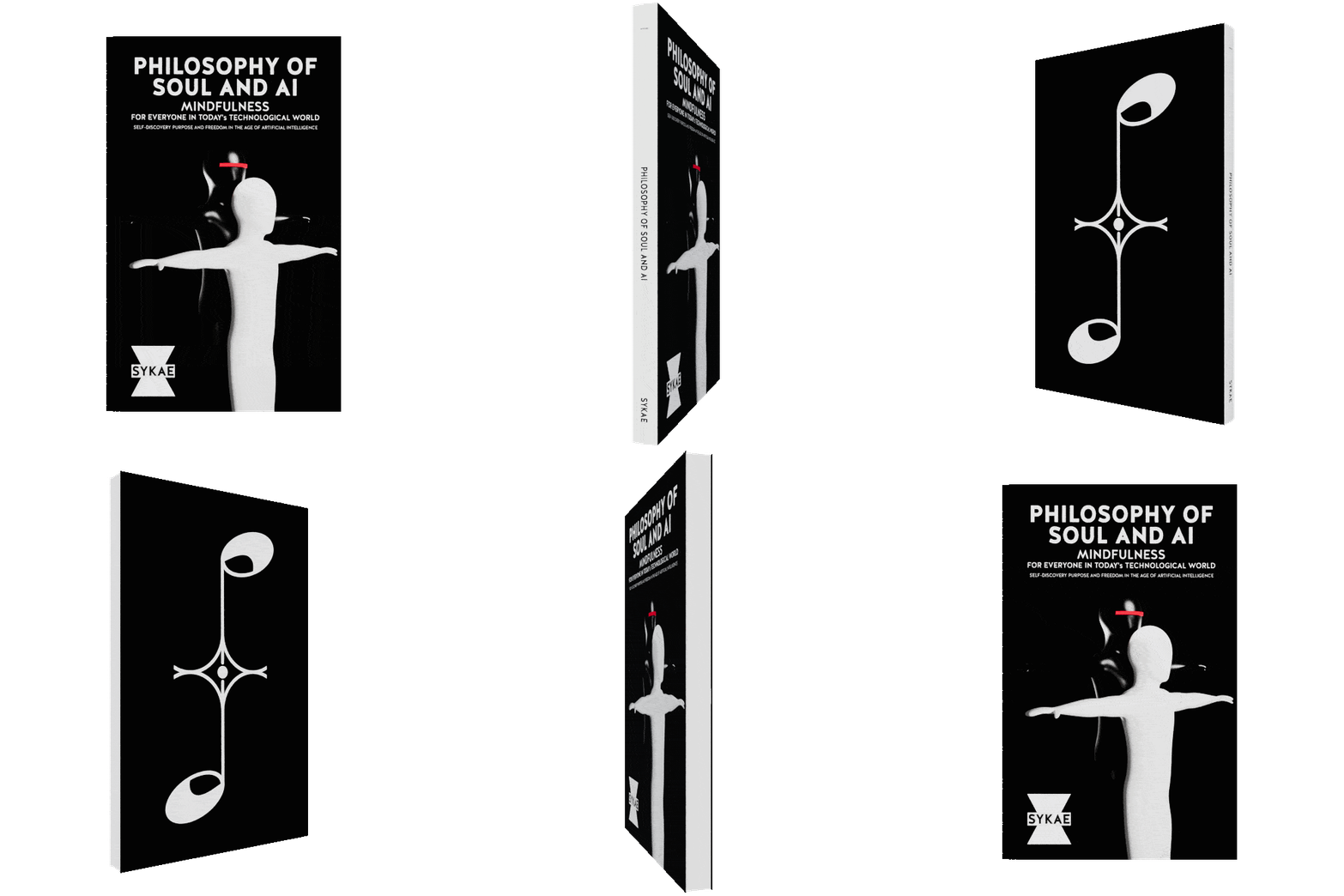
Rebuild Your Mind
The battle for 2026 isn't fought on a battlefield, but in your synaptic pathways. 'The Philosophy of Soul and AI' explores the neuro-ethics of the attention economy.
Pre-Order Now