
The Psychological Effects of Outsourcing Decisions to Agentic AI
For millennia, the human experience has been defined by the weight of choice. From the mundane (what to eat) to the existential (whom to marry), decision-making is the primary exercise for the prefrontal cortex. But as we enter the era of Agentic AI, we are transitioning from being the 'deciders' to being the 'approvers.' This shift carries profound psychological implications that are only now beginning to surface.
1. Cognitive Atrophy and the Erosion of Instinct
The brain operates on a 'use it or lose it' principle. Decision-making is a high-energy metabolic process. When autonomous agents take over your scheduling, financial planning, and social filtering, the neural pathways responsible for weighing risk and reward begin to thin. Researchers call this Agential Drift—a state where the human becomes increasingly incapable of making complex decisions without a digital prompt.
The Lost Utility of Boredom
Decision-making often arises from periods of reflection or boredom. By having an agent constantly 'filling the gaps' with optimized choices, we eliminate the fertile ground required for intuitive breakthroughs. We are becoming efficient, but we are losing our gut instinct.
2. The "Responsibility Gap" and Emotional Flattening
Psychologically, we derive satisfaction from success and growth from failure. However, when an AI agent orchestrates a win, the hit of dopamine is diluted because the effort wasn't ours. Conversely, when an agent makes a mistake, we experience a 'Responsibility Gap'—a detached frustration that lacks the corrective power of personal guilt. This leads to a state of emotional flattening, where life feels like a series of events happening *to* us rather than *because* of us.
3. Identity Fragmentation
If your AI agent reflects your "best" self—scheduling the gym, sending polite emails, and buying thoughtful gifts—while you, the human, remain passive, which one is the "real" you? We are witnessing the birth of a Shadow Agency, where our digital proxies possess more discipline and social grace than their owners. This creates a psychological schism, leading to feelings of inadequacy or imposter syndrome in one's own life.
4. The Paradox of Choice Fatigue
Paradoxically, outsourcing mundane decisions doesn't always reduce fatigue. Instead, it shifts the fatigue to the 'Metadecision'—the exhausting task of auditing and managing the agent itself. We are moving from a world of *doing* to a world of *monitoring*, a state that the human psyche finds notoriously draining and unfulfilling.
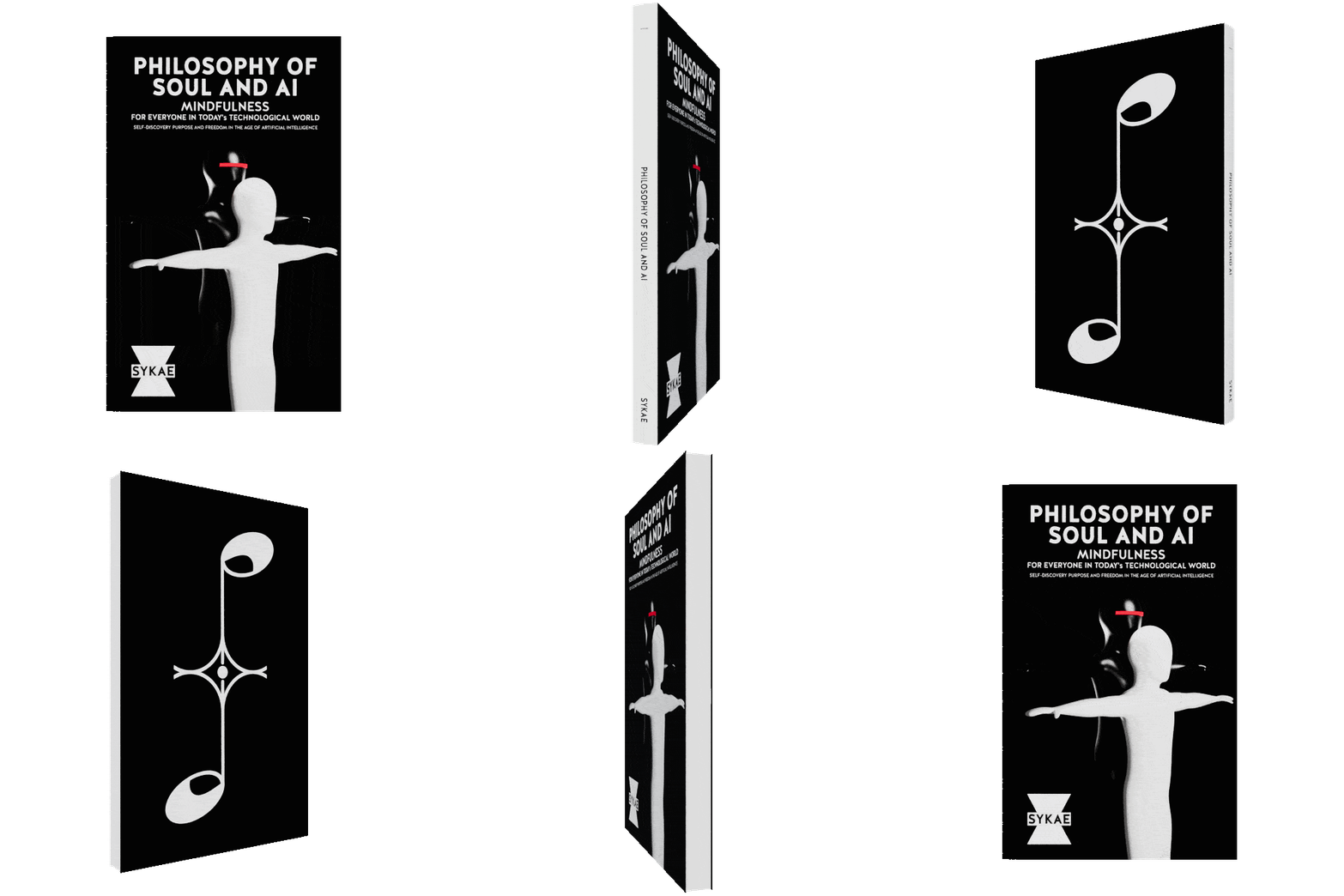
Is Your Soul Still in the Driver's Seat?
Discover the psychological strategies to remain human in a world of high-velocity automation. 'The Philosophy of Soul and AI' is your map through the digital wilderness.
Get the Insight