
The Principles of Humanistic AI Design: Building for Human Flourishing
If "Efficiency AI" aims to remove the human from the process, Humanistic AI aims to make the human more present. Designing for Human Flourishing (Eudaimonia) requires a departure from standard UX patterns. It requires a commitment to the long-term cognitive and emotional health of the user over the short-term convenience of the task.
The Shift in Objectives
To build systems that promote flourishing, we must redefine what we are building for. It is the difference between a tool that "does it for you" and a tool that "helps you do it better."
| Feature | Efficiency Design | Humanistic Design |
|---|---|---|
| Goal | Task Completion | Human Growth |
| Interface | Seamless / Invisible | Reflective / Conscious |
| Outcome | User Dependency | User Mastery |
| Metric | Time Saved | Insight Gained |
The Four Pillars of Flourishing Design
1. Radical Transparency (No "Magic")
AI should never be a "black box." A humanistic system explains its reasoning, cites its sources, and admits its uncertainty. By demystifying the technology, we give the user the power to challenge it, fostering a critical partnership rather than blind trust.
2. Agency Scaffolding
Automation often results in "learned helplessness." Humanistic design provides tools that augment capability. If an AI writes a draft, it should explain why it chose those words, allowing the user to learn the craft alongside the machine.
3. Contextual Empathy
Flourishing happens when technology respects our biological limits. This means designing AI that understands human focus, recognizes signs of burnout, and encourages the user to step away when the digital engagement becomes counterproductive.
4. Multi-Dimensional Optimization
Standard AI optimizes for a single variable (e.g., clicks). Humanistic AI optimizes for a "vector" of variables: intellectual stimulation, emotional well-being, and community impact. It considers the second-order effects of every interaction.
From "Users" to "Practitioners"
In the world of Humanistic AI, we stop calling people "users." A user is a consumer of a service; a practitioner is someone who uses a tool to hone a skill. Our design goal is to facilitate a state of Flow—the intersection of challenge and skill—rather than a state of passive consumption.
The SYKAE Vision: Algorithms with Honor
At SYKAE, we believe that software should be built with a sense of honor toward the person using it. We don't just build code; we build environments. Designing for human flourishing is a moral imperative in an age where our minds are increasingly shaped by the logic of the machine.
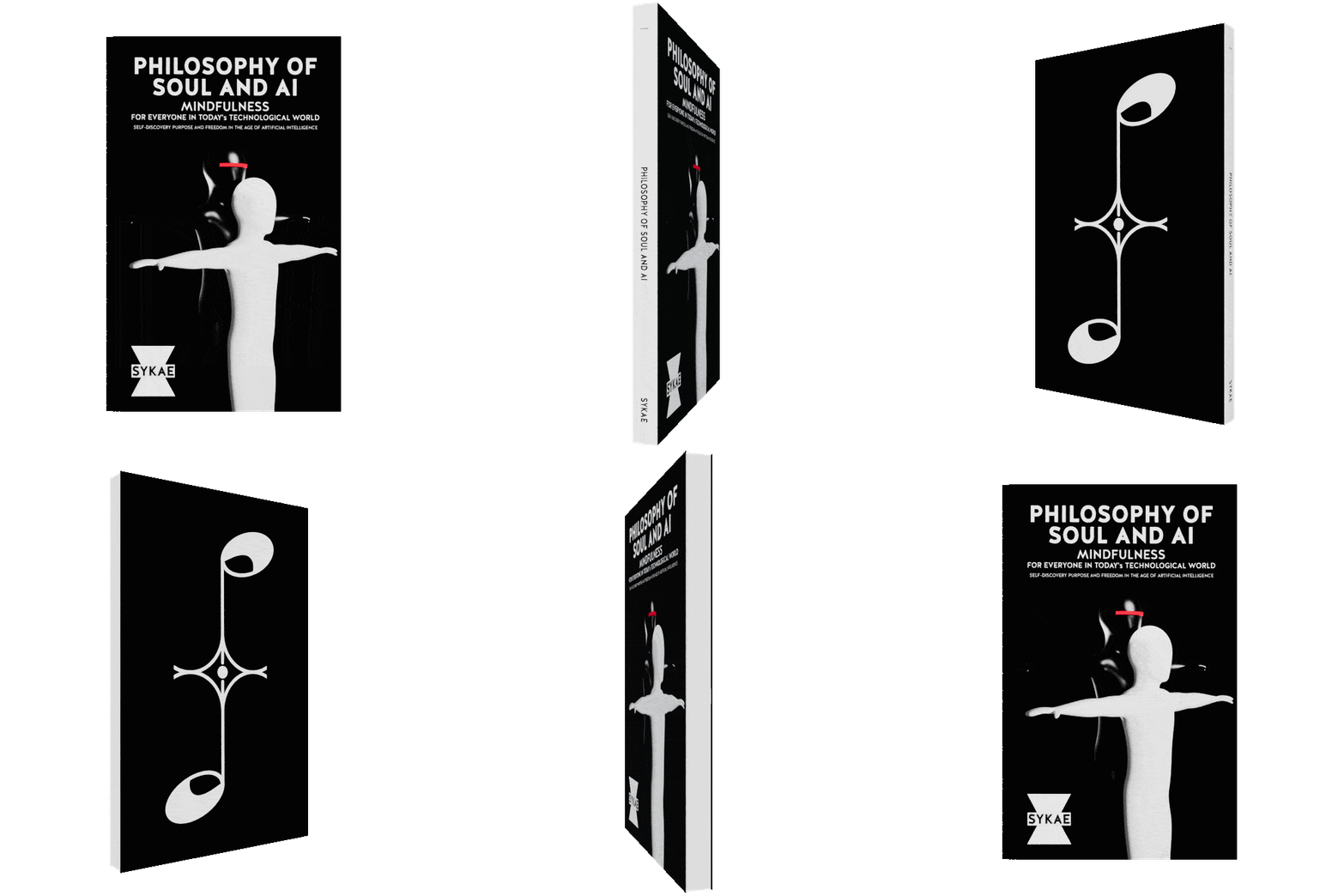
Design the Future of Soul
Join the movement to redefine the relationship between humanity and technology. Explore the full framework in our seminal work.
Read the Manifesto