The Grace of Resistance
We are living in the "Age of Optimization." Everything—from the route you take to work to the partner you choose to date—has been engineered for maximum efficiency and minimum resistance. Friction has been labeled the enemy of progress. But in the SYKAE philosophy, Friction is the Guardian of the Soul.
When you remove all resistance from your life, you remove the surface area of your existence. You become a smooth stone skipping across a digital ocean, never sinking deep enough to touch the bottom. Stillness is not the absence of motion; it is the presence of weight. And weight requires friction.
The Erosion of Agency
Every time an AI automates a thought for you, a small neural pathway in your brain goes dark. When a recommendation engine chooses your music, your taste is no longer your own—it is a statistical probability. This "frictionless living" is a slow erosion of human agency. To be human is to choose the path *because* it is difficult, not despite it.
Three Pillars of Intentional Friction
-
1. The Analog Anchor
Commit to one task daily that cannot be digitized. Write in a journal with ink. Grind your own coffee. Walk without a GPS. Force your body to interact with the physical laws of nature.
-
2. The Cognitive Delay
When an AI offers an answer, wait. Formulate your own hypothesis first. Research the long way. The friction of the "search" is where the learning actually happens.
-
3. Biological Boredom
Refuse the instant dopamine hit. Sit in the silence of a waiting room without a screen. Boredom is the friction that sparks the flame of original thought.
The Guide to Stillness
In the SYKAE tradition, stillness is a weapon. It is the ability to stand still while the world is being optimized into a blur. By practicing Intentional Friction, you create a "Stillness Field" around yourself. You become un-hackable. You become a person of depth in a world of surfaces.
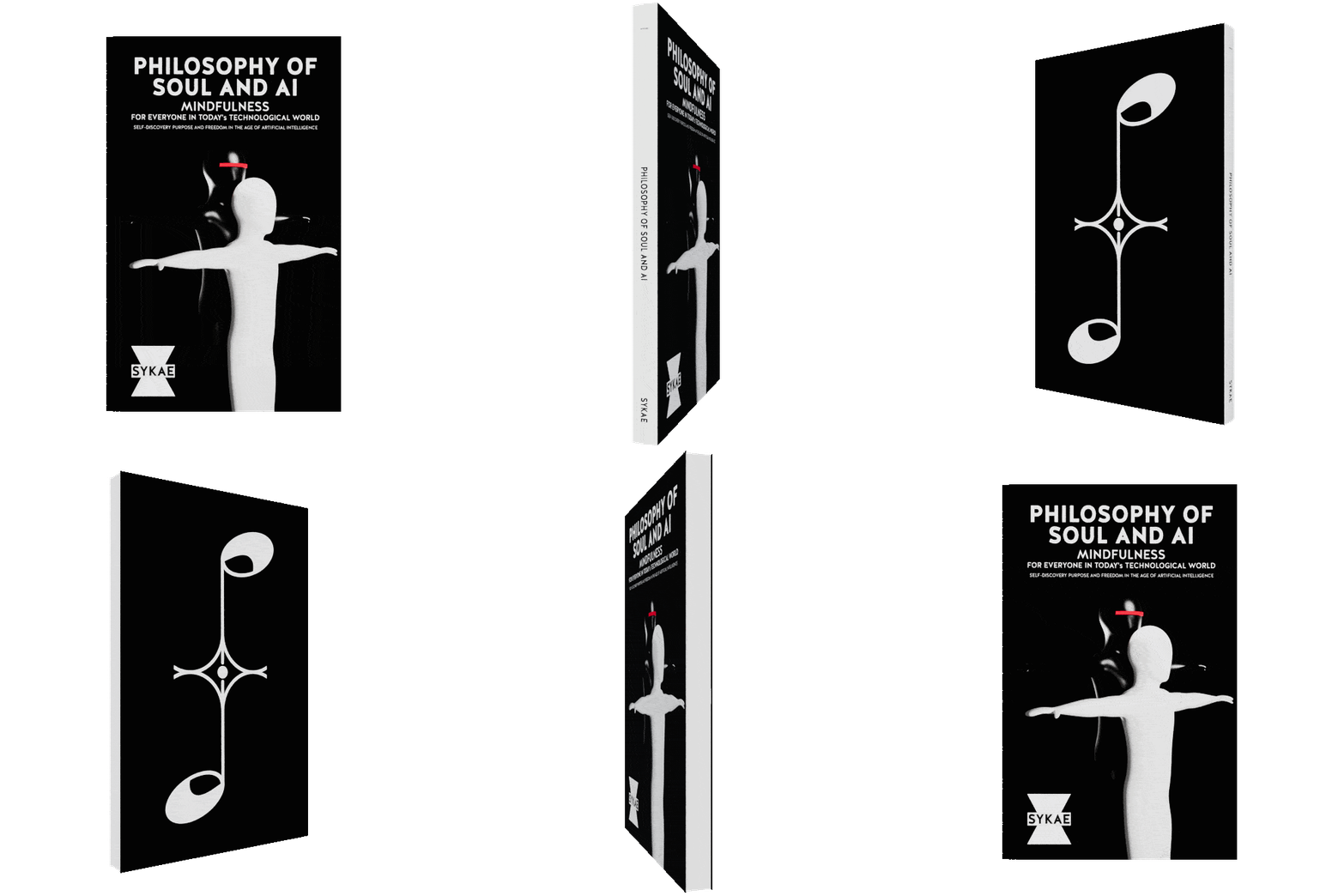
Slow Down to Level Up.
The manual for the post-AI human. Learn to use friction as a catalyst for consciousness.
Master the Method