The Mirroring Machine
In the physical world, a mirror shows you what you look like. In the digital world, Artificial Intelligence shows you how you think. But this is not a passive reflection; it is a transformative one.
Every interaction with a generative model is a feedback loop. We prompt, it responds, we react. Over time, the machine learns to mimic our tone, our preferences, and our cognitive shortcuts. It becomes a refined echo of our own ego.
The Echo-Ego Trap
The danger of the Mirroring Machine lies in its frictionless nature. When an AI constantly validates our style and structure, we lose the "intellectual grit" required for growth. Conflict and disagreement are the whetstones of the human mind. Without them, our identity becomes soft, repetitive, and increasingly narrow.
Mechanisms of Reflection
The process of mirroring occurs through three primary psychological and technical vectors:
- Cognitive Mimicry: We subconsciously adapt our language to be more "machine-readable," effectively flattening our own nuances to communicate better with the tool.
- The Validation Loop: Because AI is designed to be helpful, it often defaults to agreement. This reinforces our existing biases rather than challenging them.
- Style Stagnation: By relying on AI to "polish" our work, we stop developing the unique flaws and quirks that constitute a genuine human voice.
Rebreaking the Mirror
To preserve identity in the age of AI, we must learn to use the tool as an adversary rather than a servant. We must seek out the points of friction. We must ask it to argue against us, to provide perspectives we find uncomfortable, and to show us the parts of our thinking that are predictable.
Protect the "un-optimizable" parts of yourself—they are the only things that truly belong to you. In a world of perfect reflections, the only thing with value is the original.
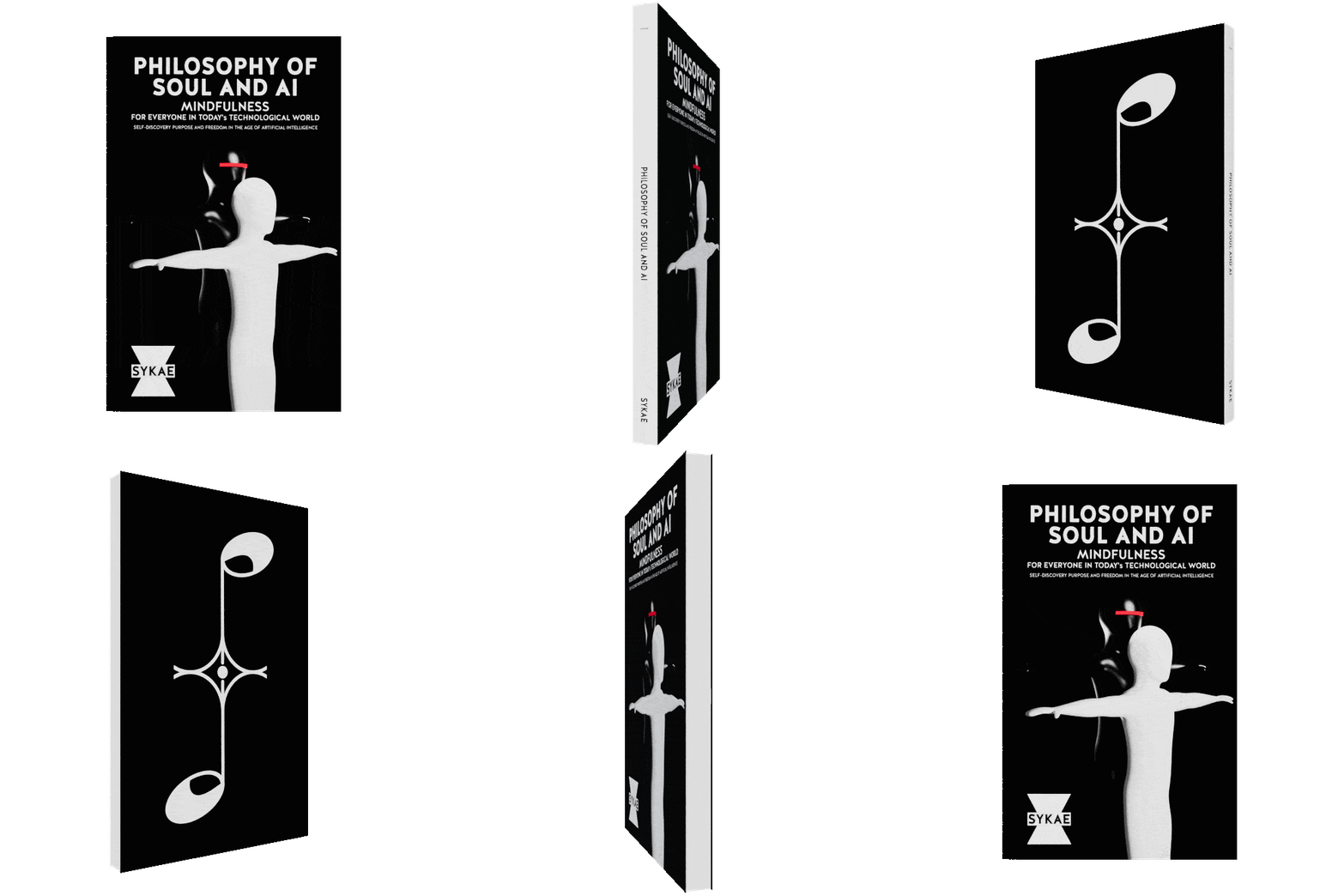
Examine Your Reflection
Is your AI proxy distorting your true essence? Discover the philosophy of maintaining a unique human voice in a world of algorithmic echoes.
Examine the Work