Managing AI Anxiety: Techniques for the Original State
The rise of Large Language Models and generative systems has birthed a new form of existential dread: AI Anxiety. It is the persistent fear that human contribution is becoming redundant, leading to a paralysis of the creative spirit. To combat this, we must return to the "Original State"—a psychological baseline where value is derived from the act of being, rather than the efficiency of output.
The Trap of Output-Centric Worth
Most AI anxiety stems from a societal obsession with "results." If a machine can produce a painting or a poem in seconds, the human brain begins to question the utility of its own labor. However, the Original State teaches us that the process of creation is a biological necessity for neuroplasticity. The machine can simulate the result, but it can never experience the evolution of the self that occurs during the struggle of human effort.
The Original State Framework
• Embrace Inefficiency: Intentionally choose a slow, manual method for a task once a week. This reminds your nervous system that speed is not synonymous with quality.
• The Sensory Audit: When anxiety spikes, ground yourself in the five senses. AI has no nervous system; your ability to feel texture, scent, and biological rhythm is your unique advantage.
From Competition to Curation
Instead of viewing AI as a competitor for your job, view it as a mirror for your humanity. The more the world is flooded with automated content, the higher the "Human Premium" becomes. Managing AI anxiety involves shifting your identity from a "worker" (who produces) to a "witness" (who experiences and directs). When you are anchored in the Original State, the machine becomes a tool, while you remain the architect.
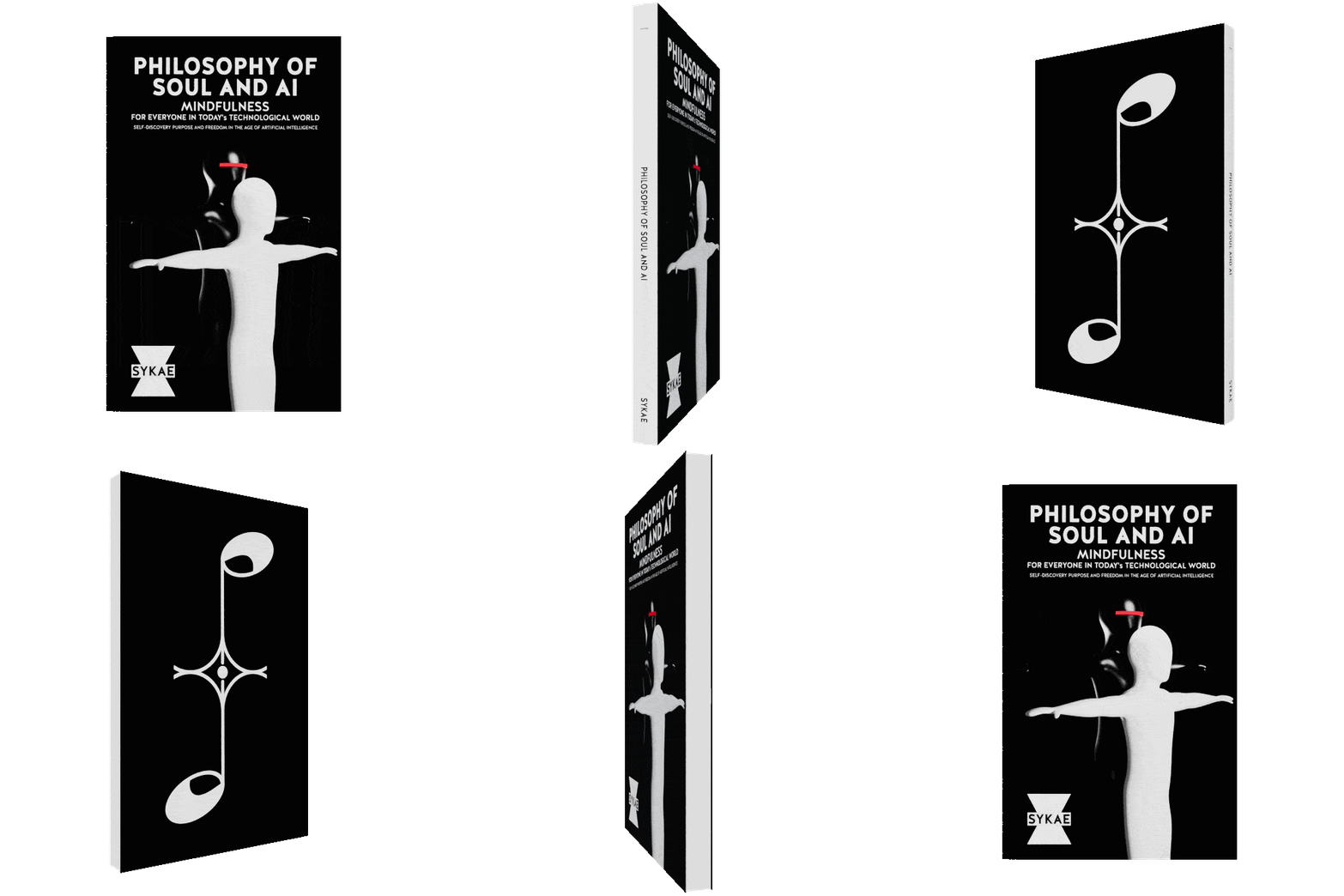
Master Your Future
Learn more about the psychological shifts required to thrive alongside super-intelligence in our comprehensive guide.
Get the Book