The Intersection of AI Philosophy and Ancient Wisdom
We often treat Artificial Intelligence as a novelty of the 21st century—a sudden rupture in the timeline of human development. However, the philosophical challenges it presents are echoes of questions asked in the agora of Athens and the monasteries of the Himalayas thousands of years ago.
Ancient Frameworks for Modern Code
Stoicism & Output
The Stoic focus on the "internal citadel" helps us navigate a world of AI-generated noise. It teaches us to value our own agency over the automated abundance around us.
The Socratic Prompt
Prompt engineering is effectively a digital revival of the Socratic Method. We learn that the quality of truth depends entirely on the precision of the question.
Taoist Flow
The "Wu Wei" (effortless action) finds a new meaning in AI collaboration. It’s about finding the path of least resistance between human intent and machine execution.
Maya and the Digital Illusion
Ancient Vedic philosophy speaks of Maya—the grand illusion that obscures the true nature of reality. In the age of Deepfakes and generative hallucinations, the concept of Maya becomes a practical survival guide. If we cannot trust our eyes (the hardware), we must learn to trust our discernment (the software of the soul).
By applying these ancient filters to our modern technology, we don't just become better users of AI; we become more resilient human beings. The silicon age does not replace the stone-tablet wisdom; it validates it.
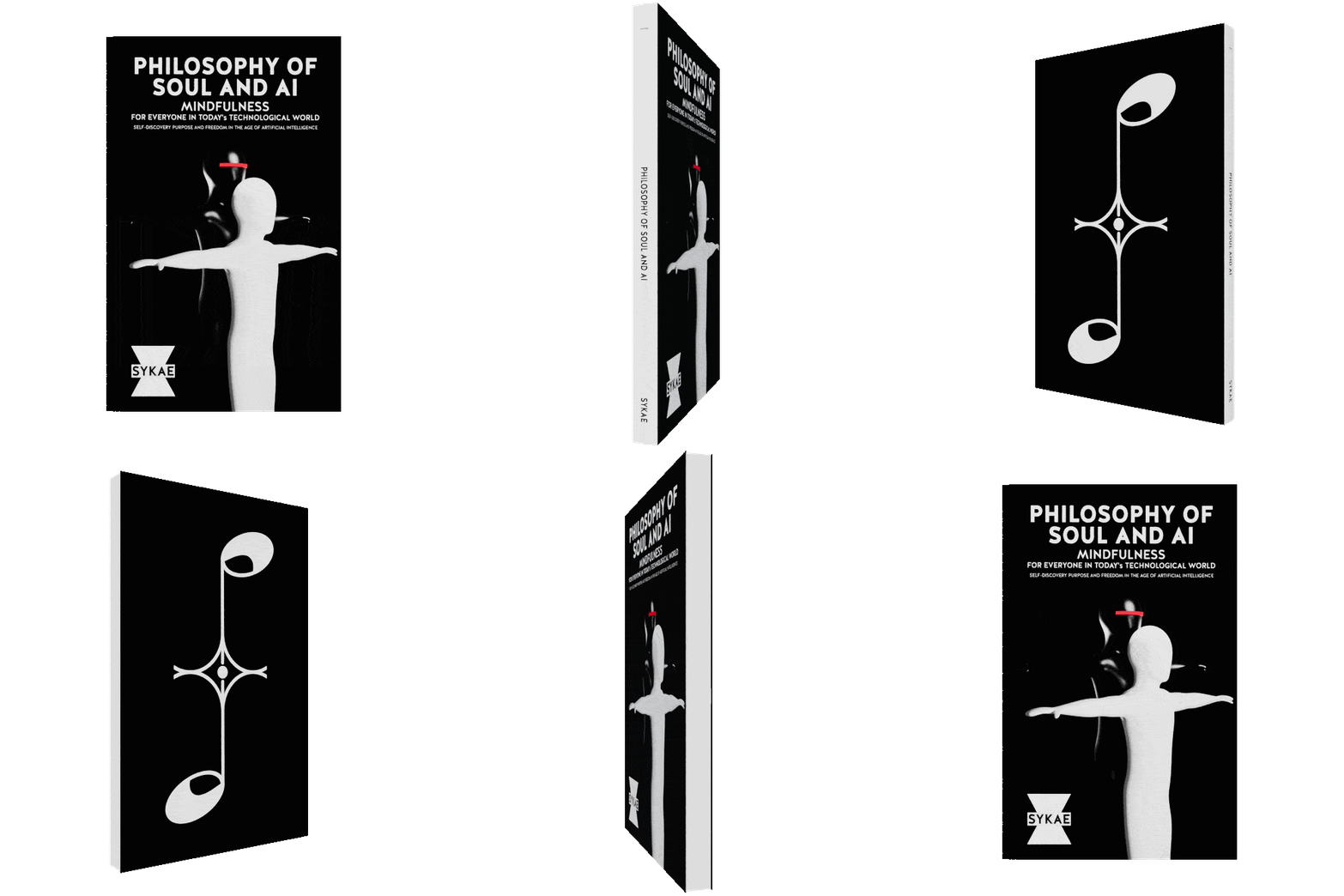
Bridge the Centuries.
Learn how to apply timeless principles to the most advanced technology ever created.
Explore the Synthesis