
How to Read an Artificial Intelligence Book Critically
The marketplace is currently flooded with "AI experts" who were "Crypto experts" last year and "Metaverse experts" the year before. For the SYKAE practitioner, time is the most valuable non-renewable resource. You cannot afford to spend it on derivative works or shallow prompt-engineering manuals.
To read critically in this space, you must look for the underlying ontology of the book. Does the author believe the human mind is just a complicated computer? Or do they recognize a qualitative difference? Here is how to filter the noise.
If a book focuses heavily on specific software versions or UI screenshots (e.g., "How to use ChatGPT-4"), its value will expire within six months. Look for books that discuss principles, logic, and human psychology.
Be wary of authors who use overly emotional language to describe algorithms (e.g., "The AI wants to help you" or "It feels creative"). This is a linguistic sleight-of-hand that masks the statistical nature of the technology.
Does the author address the loss of meaning? A critical AI book should not just celebrate efficiency; it should mourn—or at least acknowledge—the potential erosion of human agency and the unique value of the human "gut feeling."
The Three Questions
Before finishing the first chapter, ask yourself these three questions:
- Does this author respect the mystery of human consciousness?
- Is the advice "Machine-First" (how to serve the tech) or "Human-First" (how to use the tech to be more human)?
- If the specific AI models mentioned today disappeared tomorrow, would the book's core lesson still be true?
Critical reading is the first step toward critical thinking. Don't let a "New York Times Bestseller" sticker dictate your intellectual diet. Look for the depth, look for the struggle, and look for the soul.
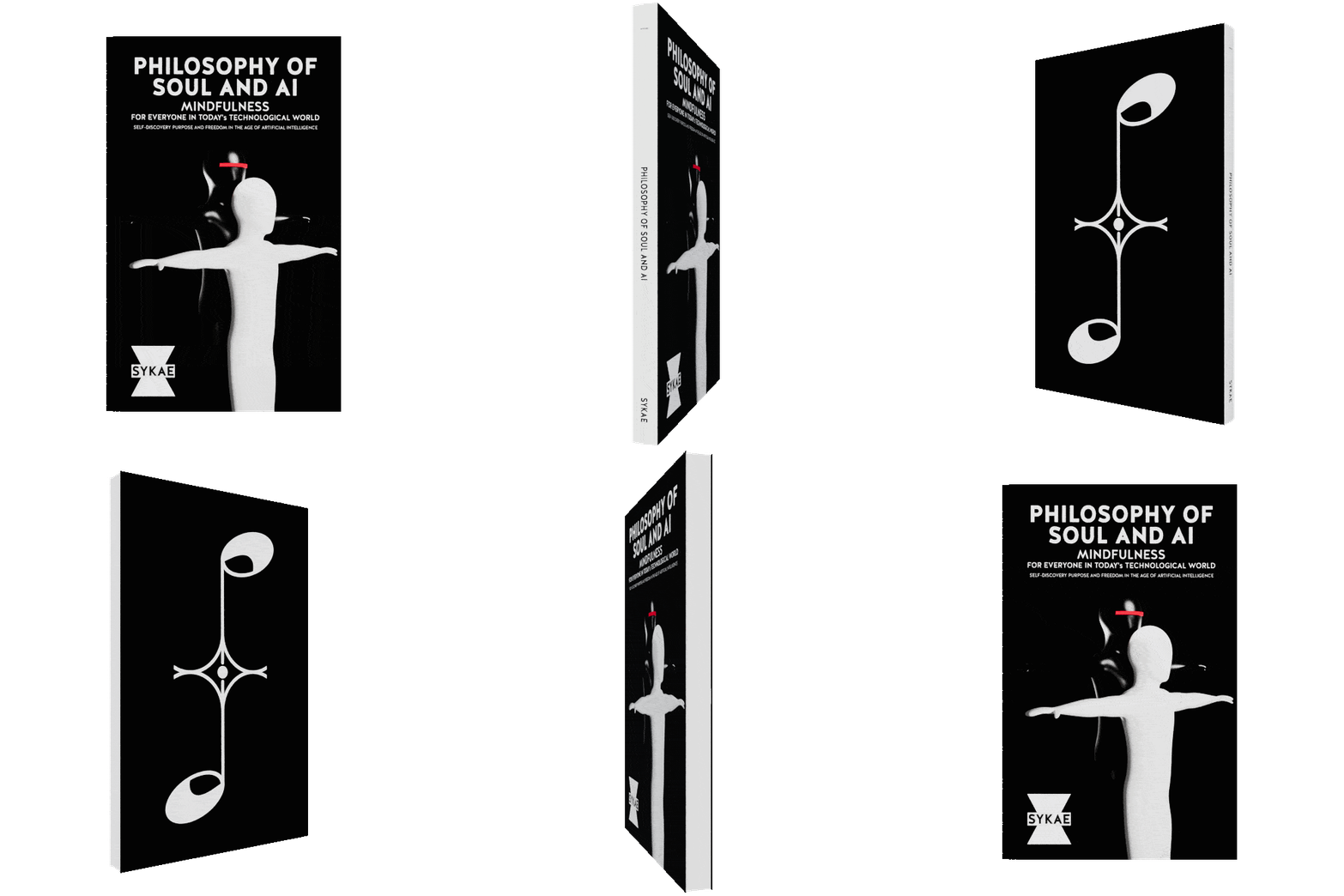
The Gold Standard.
Experience the book that practitioners are calling the most important philosophical work of the 2020s.
Get Your Copy