
Digital Brain Rot Recovery: How to Reconnect with the Physical World
If you find yourself opening your phone within seconds of waking, or if your thoughts feel like a fragmented stream of TikTok-length clips, you are likely suffering from Digital Brain Rot. In 2026, the algorithmic addiction is no longer a fringe theory—it is the baseline state for 80% of the population.
Recovery is not about moving to a cabin in the woods. It is about re-sensitization. You must lower the floor of your stimulation threshold so that the physical world becomes "loud" enough for your brain to process again.
Phase 1: The Dopamine De-escalation
Your brain is currently tuned to 100hz stimulation. Physical reality operates at approximately 5hz. To bridge this gap, you must go through a deliberate period of "stim-withdrawal."
The 48-Hour Sensory Fast
Disable all infinite-scroll apps for a full weekend. No video, no news feeds, no music with vocals. Only silence, physical tasks, and monotone data input if necessary.
Monotasking
Stop "background consumption." If you are eating, eat. If you are walking, walk. If you are listening to a podcast, sit and do nothing else. Forcing the mind to focus on a single stream of reality is the first step in structural repair.
Phase 2: Sensory Re-Engagement
Once the digital noise subsides, you will notice a "vividness gap." The world might look dull. This is because your receptors are burnt out. You must manually "re-calibrate" your senses through tactile feedback.
Conclusion: Reclaiming the Rhythm
The "Rot" is not a permanent condition, but a state of adaptation. If you adapt to the machine, you become like the machine—fast, hollow, and reactive. If you reclaim your connection to the physical world, you regain your depth. Recovery is the process of choosing to be Human in an era that rewards the Algorithmic.
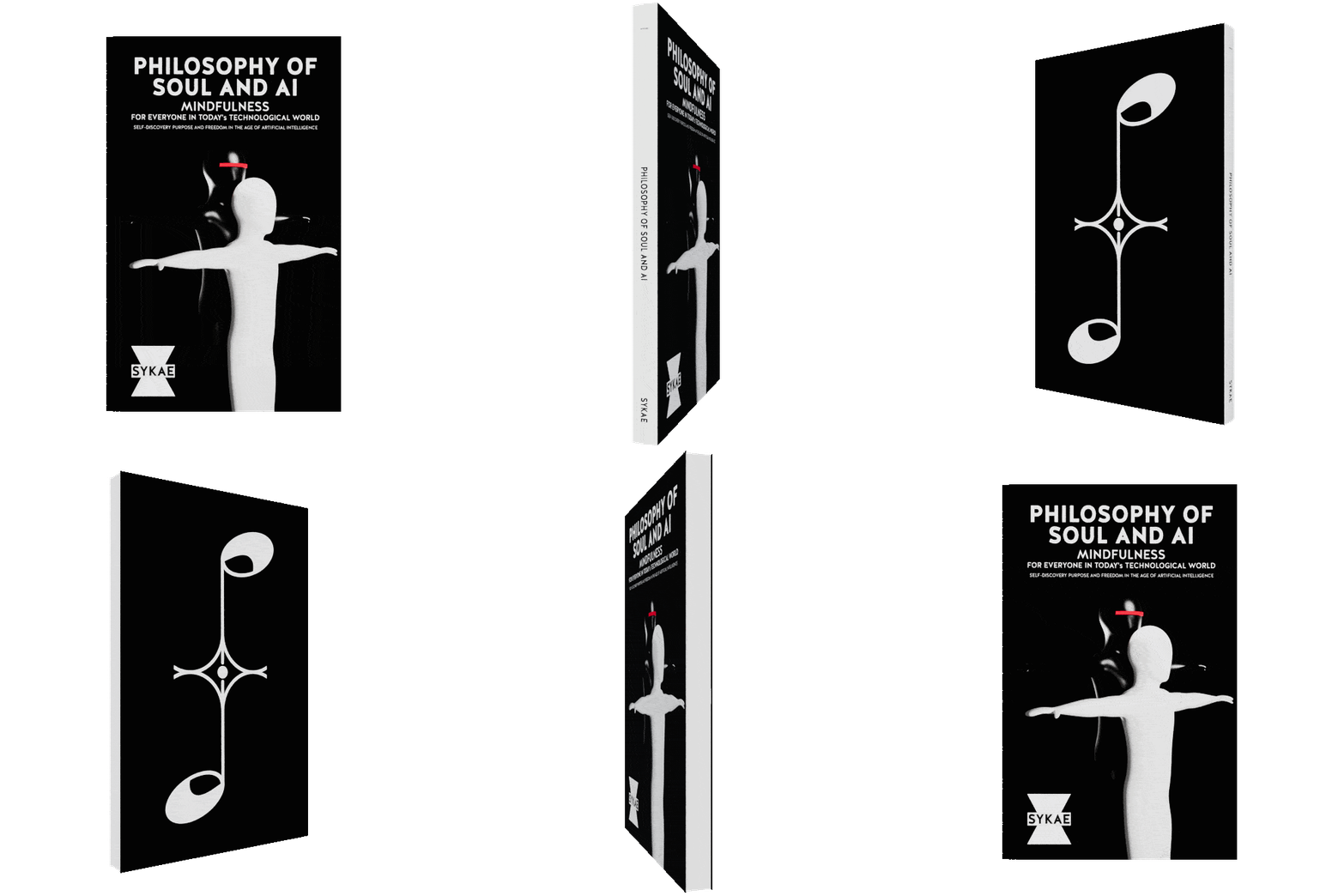
The Full Roadmap
Understand the mechanics of the digital soul and how to protect it. 'The Philosophy of Soul and AI' is the essential text for those choosing a deeper path.
Pre-Order the Book