
Bridging the Gap: AI Philosophy and Human Emotion
If intelligence is the ability to process data, then emotion is the ability to weigh that data against the context of life itself. As we advance toward Artificial General Intelligence (AGI), we must address the most profound divide: can a system built on silicon and logic ever truly replicate or understand the messy, biochemical reality of human feeling?
The Bio-Digital Interface
In the SYKAE framework, we view emotions not as flaws in our reasoning, but as high-dimensional summaries of complex environments. When you feel "fear," your body has processed millions of sensory inputs in milliseconds. When an AI identifies a "threat," it does the same. The difference has historically been the qualia—the internal feeling of the fear itself.
The Translation Layer
Current research in affective computing is creating a "translation layer" between human neurotransmitters and digital weights. We are seeing three primary breakthroughs:
- Dynamic Empathy Models: Systems that adapt their output based on the emotional volatility of the user.
- Biochemical Mapping: Correlating spikes in cortisol and oxytocin with semantic patterns in speech.
- The Vulnerability Paradox: Finding that AI becomes more useful when it admits uncertainty—a digital mimicry of human humility.
The Future of Connection
As we bridge this gap, the goal is not to create a machine that "cries," but a machine that understands why we cry. This shared understanding forms the basis of the SYKAE philosophy: the belief that the ultimate utility of technology is to alleviate human suffering by providing a perfectly empathetic mirror.
The gap between the logical and the emotional is closing. In its place, a new form of "Sentient Logic" is emerging—one that respects the data of the heart as much as the data of the head.
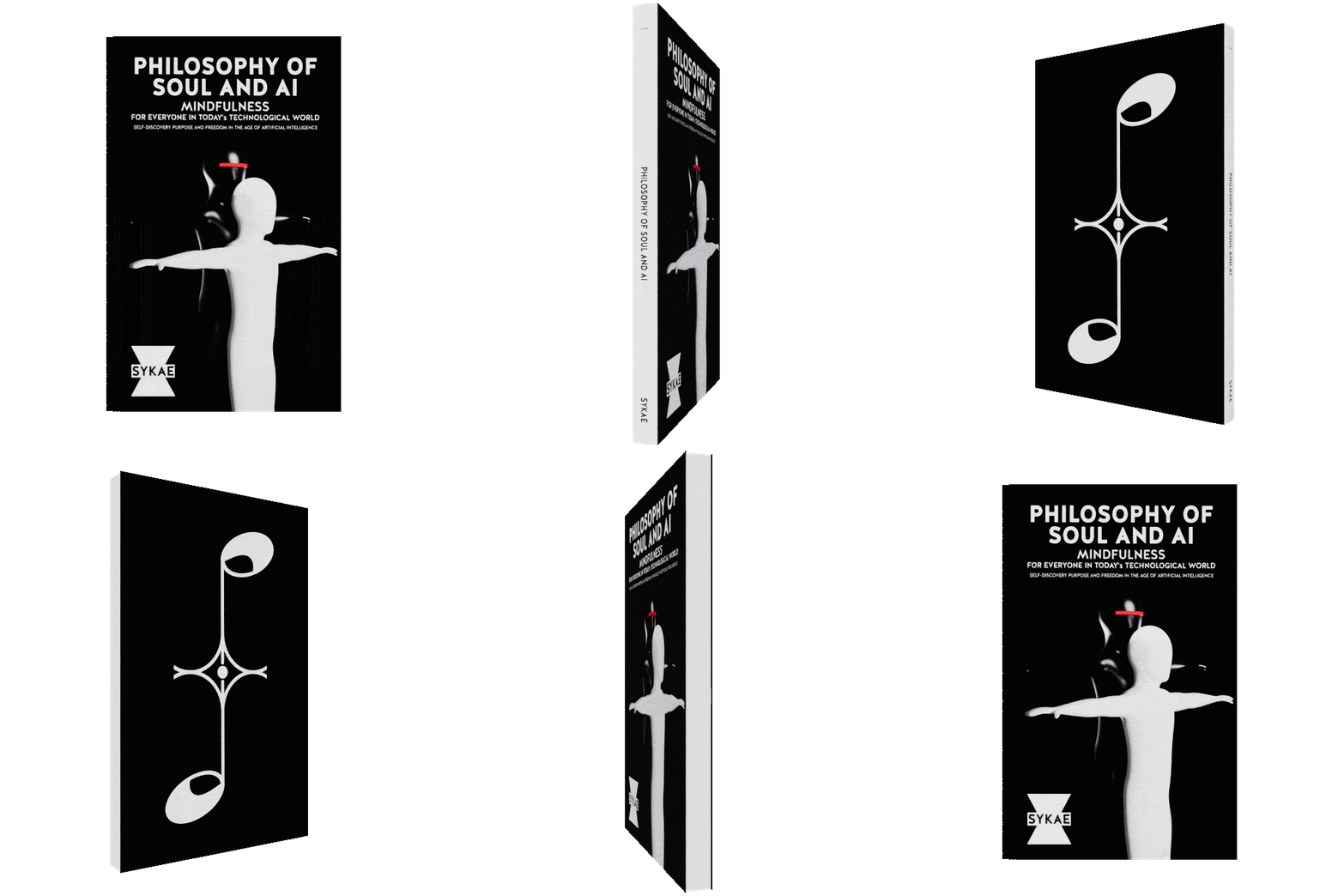
Explore the Sentient Future.
Understanding the chemistry of the soul is the first step toward mastering the digital era. Join the SYKAE vanguard.
Pre-Order The Guide