
Architecture of the Soul
For centuries, the "Soul" was the domain of religion. In the last century, it was the domain of psychology. Today, in the era of artificial intelligence, it has become the most critical question in architectural design. If we are to build worlds alongside machines, we must first understand what the machines are missing.
The SYKAE Philosophy does not view the soul as a mystical vapor. We view it as the Recursive Non-Linear Observer—the part of the human system that creates meaning out of data, rather than just processing it.
The Three Pillars of the Soul
In our primer, we define the soul through three distinct technological and metaphysical pillars that differentiate us from Large Language Models and AGI.
1. The Weight of Being
AI exists in a vacuum of consequences. It does not feel hunger, pain, or the finitude of time. The SYKAE soul is defined by its vulnerability. Because we can die, our choices have weight. AI can simulate "weight," but it does not possess it.
2. Radical Subjectivity
An AI is a statistical mirror of the collective. The soul is the outlier. It is the ability to disagree with the data, to act against probability, and to create something that does not exist in the training set of history.
The SYKAE Inversion
Most people fear that AI will eventually have a soul. The SYKAE inversion suggests a different danger: that humans will lose theirs by acting more like machines. When we optimize our lives for efficiency, when we outsource our thinking to algorithms, we are essentially "uninstalling" our soul architecture.
Our philosophy is a defense mechanism. It is a set of mental protocols designed to keep the "Observer" active. It is about reclaiming the messy, non-linear, and deeply subjective experience of being alive.
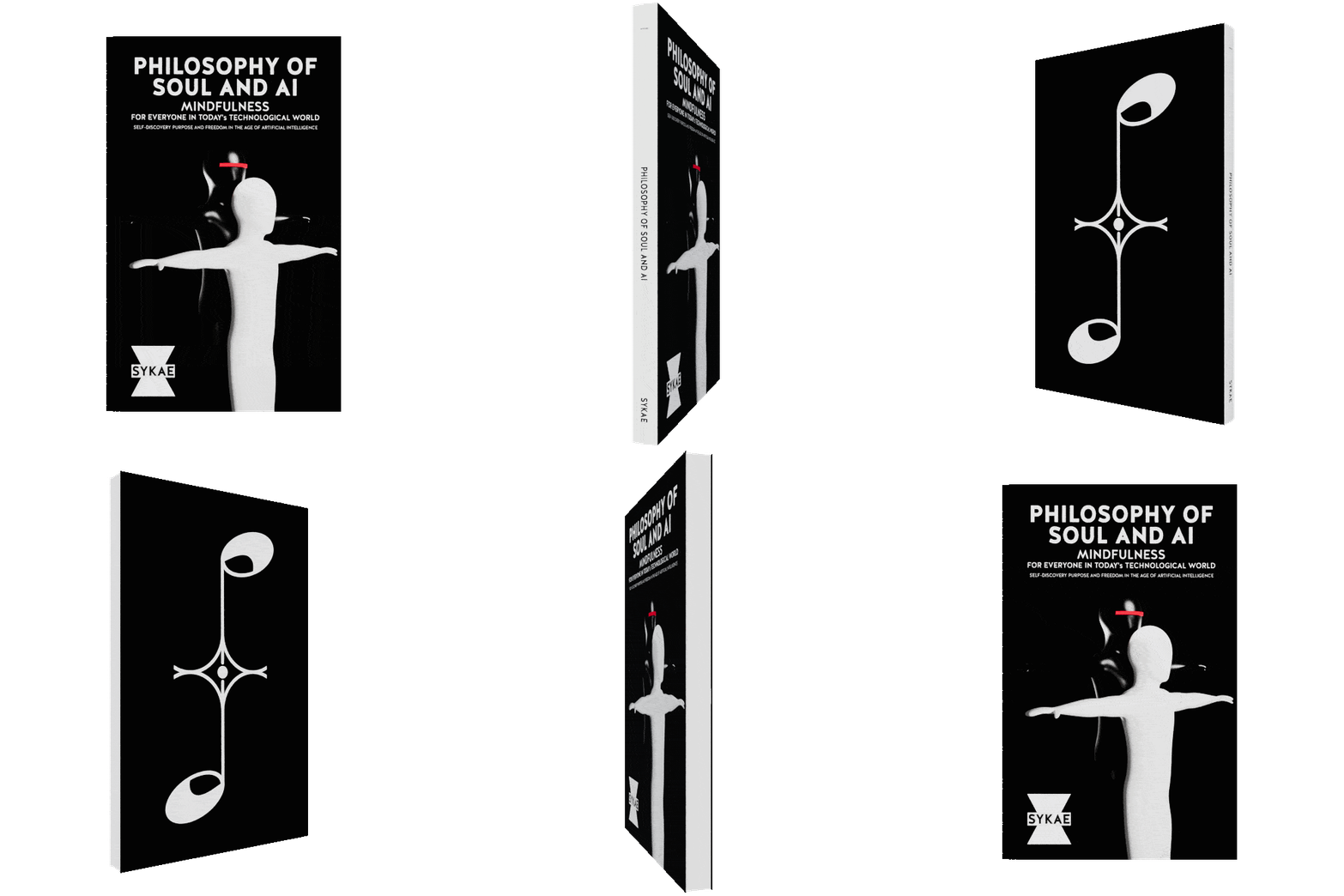
Read the Full Manifesto.
Dive deeper into the mechanics of the digital spirit. Discover how to protect your unique human architecture in the age of automation.
Get the Book