The AI Act: A Shield for Human Freedom
The European Union's AI Act is often discussed in terms of compliance, risk tiers, and legal liability. However, beneath the bureaucratic language lies a critical philosophical realization: human freedom is under threat by the sheer predictive power of artificial intelligence.
Regulation as a Spiritual Boundary
At its core, the AI Act is an attempt to define where the machine's influence must end for human agency to survive. By banning systems that engage in "behavioral manipulation," the Act inadvertently recognizes the SYKAE principle of the Original State—the necessity of a human consciousness that is not steered by external, invisible forces.
High-Risk Systems and Human Dignity
The Act classifies AI in areas like education, employment, and law enforcement as "high-risk." This categorization is more than just safety protocol; it is a declaration that these specific domains are vital to a person’s life-path. When an AI decides your career or your legal standing, it isn't just processing data—it is claiming jurisdiction over your future.
The Ban on Biometric Identification
The refusal to allow indiscriminate real-time biometric surveillance is perhaps the Act's most "spiritual" stance. To be constantly identified, tracked, and analyzed by a machine is to lose the sanctity of the private self. Protection of anonymity is, in many ways, the protection of the soul's right to remain unobserved by the synthetic eye.
Conclusion: Beyond Compliance
While the AI Act provides the legal framework, the responsibility for freedom ultimately remains with the individual. Regulation can build the walls, but only the individual can cultivate the "Original State" within them. We must use these legal protections not as a reason to be complacent, but as the breathing room required to reclaim our profound selves.
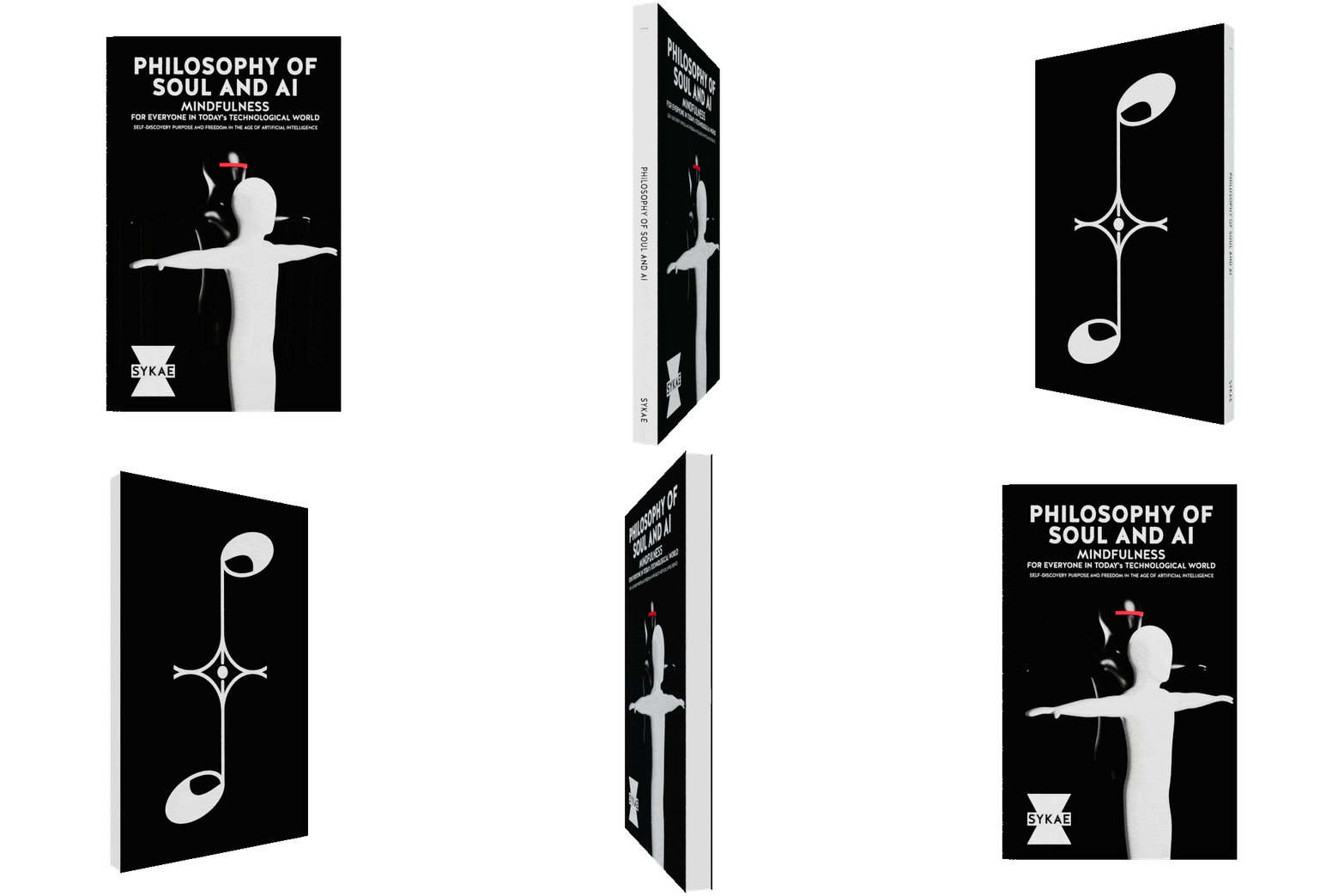
The Definitive Guide
Learn how to navigate the digital age without losing your essence. The book provides the full framework for maintaining your Original State.
Get the Book